
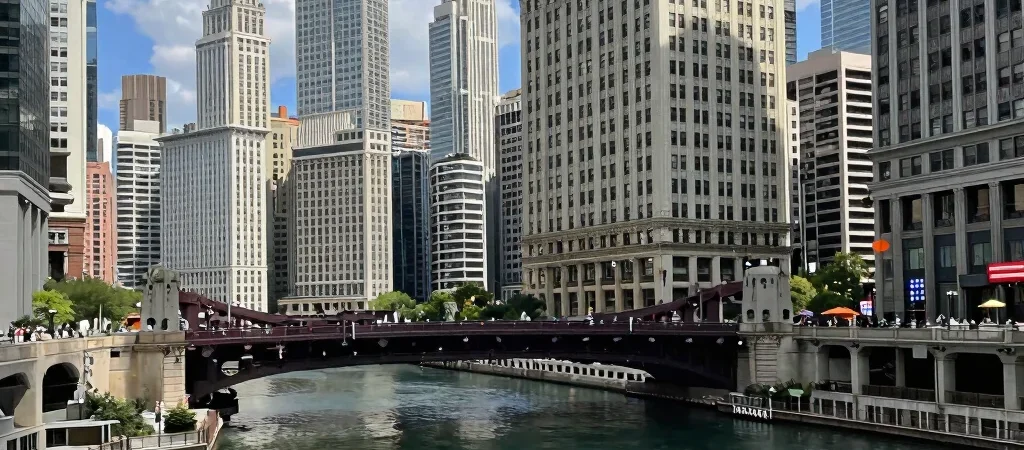
Chicago’s riverfront rewards looking up, then looking again. At street level, Wacker Drive and the river create overlapping layers of traffic, water, bridges, and buildings; from the Riverwalk, those same layers become a walkable sequence. It is a useful place to photograph the city, but the strongest frames often come from slowing down rather than chasing a skyline view.
Start with the river edge
Choose an accessible stretch of the Riverwalk and follow the water, checking local signs for any temporary closures or construction. The bridges provide natural breaks in the view, while the towers shift shape as you move beneath them. In bright midday sun, look for reflections and hard-edged shadows; on an overcast day, building details tend to read more evenly.
Frame more than towers
A bridge in the foreground can give a photograph a sense of scale that a straight-on skyscraper shot lacks. Try including a strip of water or the underside of a bridge, then wait for the scene to settle instead of filling every inch with detail. The riverfront is shared by pedestrians, workers, and visitors, so keep your setup compact and leave the walking path clear.
Plan for the weather
Wind can feel stronger beside the water, and conditions change noticeably between seasons, so bring an extra layer even when downtown streets feel comfortable. Check current Riverwalk access before setting out, especially if your route depends on a particular entrance or section. Give yourself time to walk back along the opposite side when access allows; the return view often reveals a different arrangement of bridges and facades.